Roundtable — our destination for online learning — is celebrating its third anniversary on Wednesday, June 25 with a special daylong event: A Day of Icons, which gathers five renowned experts as they explore the concept of genius and the makings of five cultural, intellectual, artistic icons — from Shakespeare to Gene Kelly.
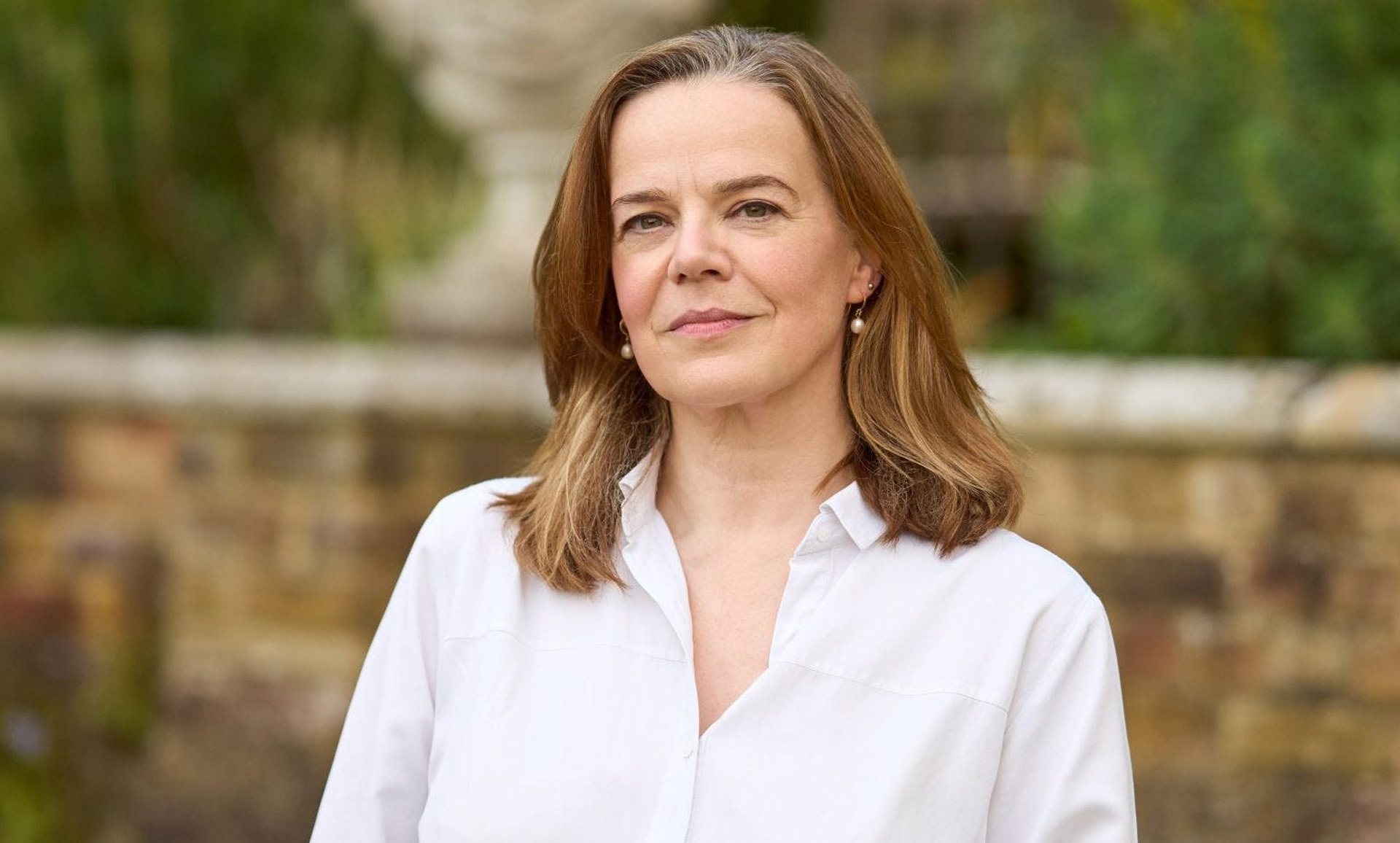
Ahead of A Day of Icons, one of these experts, celebrated historian and biographer Helen Castor, sat down with us to talk about her lecture on Joan of Arc — Joan’s extraordinary place in the historical firmament, separating fact from myth, why she remains profoundly relevant in our time, and more.
Your celebrated biography of Joan of Arc was published in 2014. Why did you choose to revisit her for your Day of Icons lecture at Roundtable?
I find that books are never finished. You finish them to the point of publication, but they stay in your imagination, and you get more perspective on them as you go along. This felt like an opportune time to revisit Joan, not least because world politics are very different now than they were more than 10 years ago, when I published the book. It seems to me that questions of faith, charisma, and political complexity are extraordinarily relevant right now. Joan’s story will repay our attention.
Over the centuries Joan has meant many things to many people, of seemingly every political and religious stripe, but let’s establish some basic, concrete facts. Who was Joan of Arc, as a real-life historical figure?
Joan came from a very ordinary background. We don’t even know exactly when she was born because most people of her class did not have those kind of life records. She was born in a small village in Eastern France called Domrémy, probably in 1412. The first we know of her was in 1429, when she appeared at Chinon castle asking to speak to the Dauphin of France, who was the leader of one side in a terrible civil war that had been going on in France for 20 years — at the same time as France’s fight with the invading English. It was a political and military situation of enormous complexity. And suddenly a teenage peasant girl arrives and says she’s been sent by God to lead the Dauphin’s army to victory against the English. It’s an extraordinary moment. Her story unfolds from there for the next two years. She’s only on the public stage for a very brief moment — she’s a shooting star in the historical firmament. But what an impression she makes.
Why do you think she was allowed to do what she did?
This is the million-dollar question. If we start our story with Joan as a young girl in the fields of Domrémy, hearing the voice of God telling her to go to Chinon, the difficulty is that we’re already seeing her in the terms of her own story — a saint. We can’t see all the maneuverings around her. But there were people around the Dauphin, in the court at Chinon, who had every interest in trying to find a sign, or a miracle, or anything to break the deadlock in the civil war and the wider war with the English. Joan wasn’t the only person in 15th-century France hearing voices from God. She’s just the one we know about.
Throughout history, there’s been a tendency to project onto Joan — people see themselves in her. Why is that, and why do you think Joan’s myth has proven to be so ideologically malleable?
It’s one of the most fascinating things about her. Joan was truly unique. A 17-year-old peasant girl walks onto the public stage and in a short period of time gets the Dauphin to send her to Orléans, which had been under siege for months, and she lifts the siege in a matter of days. But within a year she’s captured and imprisoned, and within another year she’s burned to death as a heretic by the Dauphin’s enemies. It is an extraordinarily dramatic story, and it has so many facets that you can find almost anything in it to latch onto. She wasn’t made a saint by the Catholic Church until 1920. I think one of the reasons for that long delay is that, as far as I know, she’s the only saint of the Catholic Church who was put to death by a judgment of the Catholic Church.
She still provokes controversy. She still requires us to hold different perspectives at the same time, just as she did in her lifetime. That’s why her image was used by both the Vichy regime and the French resistance during World War II; that’s why she features on the labels of a North American brand of canned beans. I’m convinced that after Jesus she has had more pop songs written about her than anyone else in history.
What’s something that you wish more people understood about her in 2025? What do you think makes her relevant for our time?
Her story is a testament to what utter conviction can achieve. She walked into a situation that could not have been more complex, and she had a very clear message. With the force of that message and her personal charisma, she cut through the complication and, for a brief moment, changed things. But complexity does not go away when you cut through it. We tend to see her as the woman who helped France triumph over England. But the backdrop of her story is a civil war in which each side was calling the other the false French, and she was sentenced to death by a group of almost entirely French clerics. Her story is a reminder not to be satisfied with surfaces when we look at politics or history.
What do you hope those who attend Day of Icons come away with after your lecture?
I hope they’ll come away with a sense of Joan herself and a deep sense of the world in which she lived. There are so few people from that time —particularly women, particularly young women, particularly young women from a humble background — that you can hear speak in the way that we can hear Joan in the record from her trial. That record is one of the most remarkable documents I have ever encountered. It is not simple to interpret — these are Joan’s words as recorded by a hostile court in Latin, a language she did not speak — and yet her voice comes through that document with such power, and such a powerful belief in what her God had sent her to do.
Join Helen Castor at Roundtable’s Day of Icons, live and streaming on Wed, Jun 25. Sign up today.