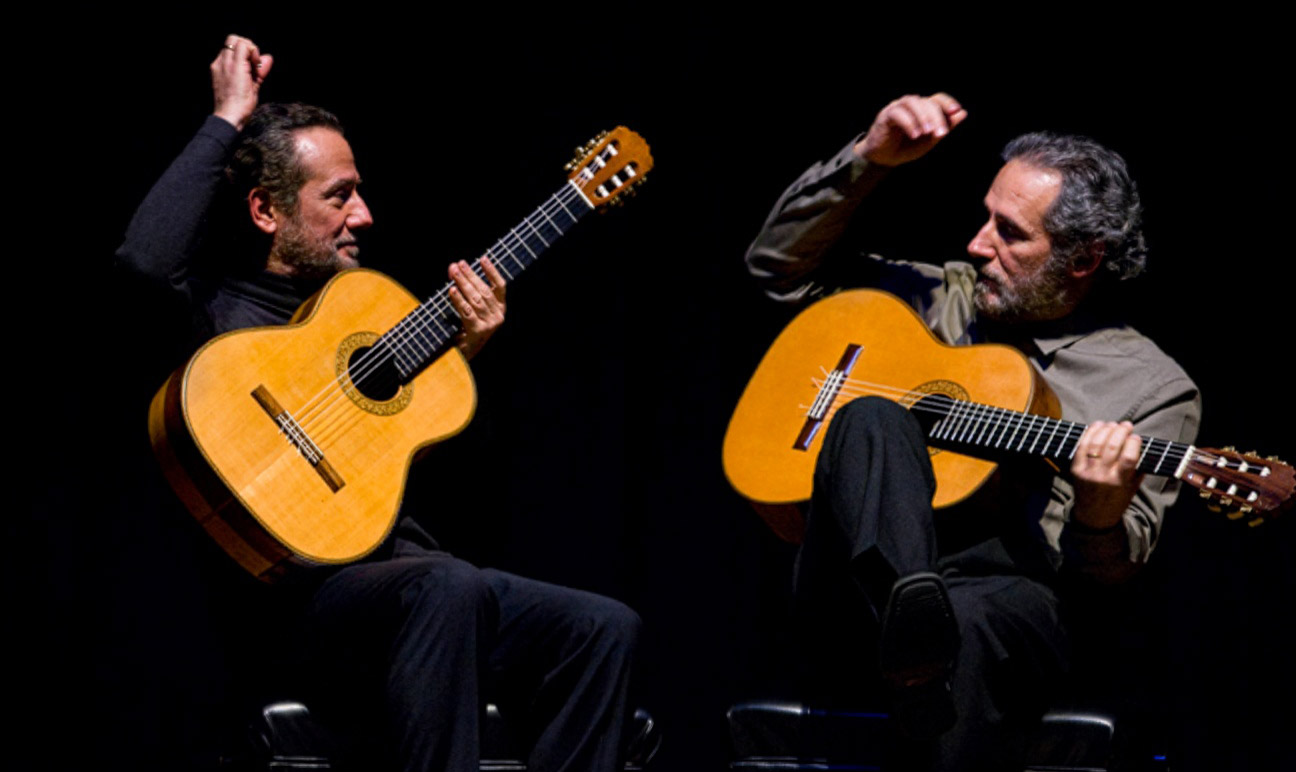
On January 24, 1980, two young Brazilian-born guitarists and brothers performed their first concert in America on the stage of The 92nd Street Y. The audience was ecstatic; The New York Times raved: “[Sérgio and Odair Assad] play like twins, with an ensemble that is virtually perfect … a marvel … miraculous … brilliant.” The duo had emerged with a major prize win at the 1979 Young Artists Competition in Bratislava just months earlier, and their 92NY concert marked the launch of an international career. Over the more than 40 years that followed, the Assads established themselves as the world’s preeminent guitar duo, captivating audiences with their unparalleled artistry, elevating and expanding the art of the guitar, creating and illuminating repertoire, collaborating with artists including Yo-Yo Ma and Gidon Kremer, teaching and inspiring the next generation of musicians. And they returned to 92NY often – for concerts, “Guitar Marathons,” and performances and talks with NYC public school students. Sérgio and Odair join us on Sat, Mar 14 to perform their final US concert as a duo – back on the stage that launched them four decades ago. We sat down with Sérgio to talk about this momentous event.
Next month’s 92NY concert with Odair is the final US date in your long and rich performance career as a duo. How are you feeling about this moment and about returning to the stage where so much began?
This final duo concert feels emotional, but also very natural. Odair and I have been making music together for almost 60 years, and this concert reflects that entire journey. What makes this evening especially meaningful is that we played our first concert in the United States at The 92nd Street Y – the very venue where our American journey began 45 years ago. To return to the same stage after so many decades feels symbolic — a full-circle moment. It’s not about nostalgia, but about recognizing the path we’ve walked together.
Tell us about the music you’ll be performing, why you chose the works you did, and what the audience can expect to experience.
The program reflects our 60 years of musicmaking. We chose emblematic pieces that represent important moments of our career as concert players – music by Villa Lobos, Egberto Gismonti, and more. The opening selections by Astor Piazzolla are especially meaningful to us. Piazzolla became an essential part of our work as a duo, and our close relationship with him shaped our musical identity. Playing his music opened many doors for us throughout our career and helped introduce us to audiences far beyond the traditional guitar world. The Valsa Abismo de Rosas by Américio Jacomino (“Canhoto”) is almost a Brazilian anthem for the guitar, and we felt it had to be part of this program. The remaining pieces represent different moments of our life on stage — music that accompanied us, challenged us, and grew with us over time. We will also play a piece I composed in homage to Roland Dyens, to pay tribute to a giant of the classical guitar who passed away prematurely and who meant a great deal to the guitar community. Overall, audiences can expect a program that is rhythmic, melodic, and emotionally direct — music that reflects who we are and where we come from.
And the piece of your own that will close the program?
The final piece, Tahhiia Li ossoulina, is very personal to us. It is an homage to our roots. We come from a mixture of Lebanese and Italian immigrants who settled in Brazil, and this piece reflects that blend. Musically, it brings together Italian lyricism with rhythms and colors from the Levant. Ending the concert with this piece feels right, because it brings together family, heritage, and identity — all the things that shaped us, both as musicians and as people.
Hearing and seeing you and Odair play together is a spellbinding experience, and much has been expressed about your almost telepathic unity. Yet you bring distinct talents to your musical partnership. Please talk about that.
Our unity comes from time, trust, and listening. After so many years, certain things happen instinctively — breathing, timing, balance. At the same time, we are very different musicians. Our personalities and our way of shaping music are not the same, and that contrast is essential. One of us may push, the other may hold. That dialogue between difference and unity is what keeps the music alive.
Kaufmann Concert Hall has come to be regarded by many artists – and listeners – as an exemplary venue for classical guitar. What makes it such a well-suited hall for this music?
Kaufmann Concert Hall has been part of our upbringing as performers. We’ve played here many times, including our 50th anniversary celebration, so it truly feels like home. The hall allows the guitar to sound natural and intimate, and that closeness creates a strong connection with the audience. It’s an ideal space for this instrument.
You began studies at 16 under a disciple of the legendary Andrés Segovia, who gave a landmark concert at 92NY in 1938. It marked the beginning of what would eventually establish 92NY as a global home for the art of the guitar. How does it feel to be part of this legacy, and what are you and Odair most proud of adding to it?
We studied with Monina Távora, an Argentine guitarist who was a former student of Segovia and who lived in Brazil for many years. That gave us the rare opportunity to study directly within that lineage. Knowing that Segovia played a historic concert at 92NY long before our time adds special meaning to being here. What we are most proud of is that we added our own voice to that tradition — trusting our instincts, our culture, and our way of making music together.
Classical guitar is both part of and apart from the world of classical music. Listeners far beyond classical music lovers respond to it. Can you talk about the instrument’s wide appeal and what excites you most about the future of the art?
The guitar is an instrument people immediately recognize. It feels familiar, close, and human. Even listeners who don’t usually attend classical concerts often connect with it right away. At the same time, the classical guitar has gone through remarkable development in recent decades. There are many more luthiers today experimenting with new techniques, making the instrument more powerful and responsive. The level of young players has also reached an unprecedented degree of technical and musical proficiency. Another important change is the significant increase in the number of women guitarists, which has brought new energy, perspectives, and voices to the instrument. All of this makes the guitar world today richer and more exciting than ever.
Teaching and bringing new generations to classical guitar – including your involvement with 92NY’s education outreach program the Concerts Schools Project – has long been central to the work you and Odair do. Please talk about its place in your lives.
Teaching has been a very important part of our lives. Odair recently retired after teaching for more than 30 years at the Royal Conservatory of Mons in Belgium, and I retired from the San Francisco Conservatory of Music about 10 years ago. But we still give master classes whenever possible in connection with our concerts. Programs like the Concerts Schools Project remind us why music matters — and why passing it on is essential.
Finally, as you close the US chapter of an extraordinary career, can you share anything about your next chapter?
Since the early 1980s, the United States has been a constant presence in our musical journey. Our debut at The 92nd Street Y was met with great success and opened the doors to a career that has lasted all these years. Although this is our final duo concert in the US, Odair and I will continue performing together in other parts of the world for the next couple of years. We are also planning to record an album featuring only our own music, something we haven’t done before. The pieces of ours on our 92NY program will be part of that recording. Beyond that, composing, teaching, and other projects will continue. This concert is not an ending, but an important moment of reflection and gratitude.
Sérgio and Odair Assad’s final US concert as a duo – Saturday, March 14 at 7:30 pm, in person only. Tickets and details.